Can the same Trump who lies constantly, flouts the norms of the rule of law, fans the flames of racial resentment, and attacks basic notions of fact and evidence offered by journalists and his own law enforcement and intelligence agencies, can this same man be right about leaving the Joint Comprehensive Plan of Action (JCPOA) Iran nuclear deal of 2015? This instance of cognitive dissonance, of holding two or more contradictory beliefs in our minds at the same time, is staring us in the face. The serial liar, that man who has undermined our alliances and replaces rational explanations with conspiracy theories, has made the right decision to leave the JCPOA and to restore and intensify the economic sanctions on Iran in an effort to bring about a definitive end to both its nuclear program and its regional imperialism in the Middle East. In the polarized climate he has done so much to create, Trump supporters forget Trump the liar while agreeing on policy while those of us who oppose him reject any policy he advocates. The desire for consistency generally overwhelms the discomfort of cognitive dissonance. In the following, I make the case for living with the discomfort of accepting that this awful man who is wrong about most everything is right about this issue.
|
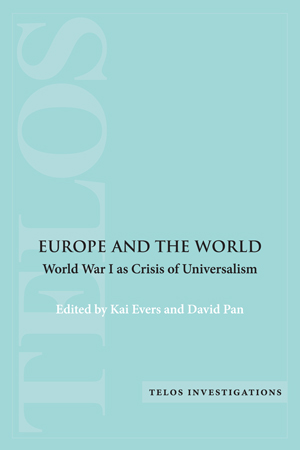
Matthias Küntzel’s book Germany and Iran: From the Aryan Axis to the Nuclear Threshold is available for purchase in our online store. Save 20% on the list price by using the coupon code BOOKS20 during checkout. Also available in Kindle format from Amazon.com. On May 8, 2018, when U.S. President Donald Trump spoke to the press to make the case for the U.S. decision to leave the nuclear deal with Iran, he stated: “America will not be held hostage to nuclear blackmail.” With this sentence, Trump initiated a new phase to diplomacy with Iran. Up to this point, nuclear blackmail, the threat that Iran would otherwise build a bomb, had defined and shaped the dynamic of negotiations. This worst case hung like a sword of Damocles over the actors. In order to avert it and in order to secure the nuclear deal, Obama refused to support the Iranian protest movement in 2009, just as in 2013 he refused to make good on the red line he had drawn in the Syrian war. Kenneth A. Taylor’s “On King, Resistance, Faith, and Despair” appears in Telos 182 (Spring 2018), a special issue commemorating the life and thought of Martin Luther King, Jr. Read the full article at the Telos Online website, or purchase a print copy of the issue in our online store. Individual subscriptions to Telos are now available in both print and online formats. Martin Luther King, Jr.’s deep and abiding religious faith led him to believe that “the arc of the moral universe is long, but . . . bends toward justice.” Though he believed that God exercises providential guidance over the universe, he did not think that the work of bending the arc of the universe belongs to God alone, with no need for human agency. We humans are urgently called by God to cooperate in the struggle for justice through “vigorous and positive action.” And King knew firsthand how arduous this struggle could be. We toil for justice in a darkened world that creaks and groans under the weight of many and diverse forms of injustice. Heeding the call may cost us much that is dear—including, as it did for King himself, our lives. King was convinced, however, that if our efforts are anchored in faith, we can rest assured that if we do heed the call, we will struggle neither alone nor in vain. The God who calls to us will struggle with us. “Evil dies on the seashore,” says King, “not merely because of man’s endless struggle against it, but because of God’s power to defeat it.” His faith that this is so not only spurred him to action but sustained him in his darkest hours and functioned as a bulwark against a potentially paralyzing despair. In the April 12, 2018, issue of Art Journal, the editor, Rebecca Brown, introduces a work of art (really, a computer program), called CitationBomb by Zach Kailer, intended to create a kind of “denial of service” attack on Google Scholar: “The more users do this, the more Google Scholar will become overflowed with citations. This will make it difficult for the algorithms to make sense of influence or impact.” The overall point is to “devalue scholarly metrics” as they represent in small the horrors of the neoliberal university. As Brown puts it, “what numerical value applies to achieving the arc of a compelling paragraph? [It makes] manifest the un-usefulness of analytics . . . its profound, destructive force.” Why are “analytics” so destructive? Kaiser explains that Google Scholar incentives “clickbait scholarship.” Meaning, since Google Scholar puts first the books or articles that get the most citations, this leads to a “winner take all” situation with scholarship. Only the articles that are cited often get cited at all, leaving all the other scholars in the dust. David D. Daniels III’s “Economic Democracy, Martin Luther King, Jr., and the Black Church Tradition” appears in Telos 182 (Spring 2018), a special issue commemorating the life and thought of Martin Luther King, Jr. Read the full article at the Telos Online website, or purchase a print copy of the issue in our online store. Individual subscriptions to Telos are now available in both print and online formats. Is the concept of a “moral arc” to the economy that bends toward justice implicit in the thought of Martin Luther King, Jr.? Can a source for this concept be found in the economic justice campaigns of the Black Church? A moral arc to the economy that bends toward justice informs King’s concept of economic democracy, which frames his campaigns for economic justice. Throughout King’s writings from 1957 to 1968, he explores the economic plight of African Americans and advocates for economic remedies to the subordination of African Americans within most sectors of the American economy and the exclusion of African Americans from other sectors. He understands that parity between capital and labor is pivotal to achieving economic justice. New from Telos Press: Europe and the World: World War I as Crisis of Universalism, edited by Kai Evers and David Pan. Order your copy in our online store, and save 20% on the list price by using the coupon code BOOKS20 during the checkout process.
|
   |
|||
|
Privacy Policy · Data Protection Copyright © 2026 Telos Press Publishing · All Rights Reserved |
||||