By Frederik Stjernfelt · Monday, November 14, 2011 Telos Press looks forward to publishing Democratic Contradictions of Multiculturalism by Jens-Martin Erikson and Frederik Stjernfelt, scheduled to appear in March 2012.
It is with an increasing feeling of sickness that I follow the incidents around the Parisian weekly Charlie Hebdo and its special issue on sharia prompted by the political developments in Libya and Tunisia.
Early in the morning of November 2nd, a window was broken and a Molotov cocktail thrown into the premises of the weekly which burned out. By sheer luck, nobody was hurt. In the expectedly strong reactions against this attack on free speech, disturbing voices and events intervene. Initially, the asylum offered to the publishers by the daily Libération constituted an encouraging event—one voice supporting the other against threats to free speech.
Continue reading →
By Alwin Franke · Friday, November 11, 2011 As an occasional feature on TELOSscope, we highlight a past Telos article whose critical insights continue to illuminate our thinking and challenge our assumptions. Today, Alwin Franke looks at Ben Morgan’s “Developing the Modern Concept of the Self: The Trial of Meister Eckhart,” from Telos 116 (Summer 1999).
 All subjectivization is a matter of drawing borders; a history of the subject is a history of the borders drawn to produce the self. Such a history of the borders, as suggested by Foucault, implies an investigation of both its sides—positivity and negativity. To write history, then, means to awaken the contemporary element in the historical, to construct constellations in which the present and the past enter into a state of sympathetic interdependence. Negativity, here, allows for the creation of counter-discourse. However, the relationship between positivity and negativity has been made all the more complex over the past decades. The borders have always been crossed indeed, but in the age of new capitalism we witness a constant blurring and redrawing of borders that allow for the incorporation of negativity into the system itself. All subjectivization is a matter of drawing borders; a history of the subject is a history of the borders drawn to produce the self. Such a history of the borders, as suggested by Foucault, implies an investigation of both its sides—positivity and negativity. To write history, then, means to awaken the contemporary element in the historical, to construct constellations in which the present and the past enter into a state of sympathetic interdependence. Negativity, here, allows for the creation of counter-discourse. However, the relationship between positivity and negativity has been made all the more complex over the past decades. The borders have always been crossed indeed, but in the age of new capitalism we witness a constant blurring and redrawing of borders that allow for the incorporation of negativity into the system itself.
Continue reading →
By Michael Bacal · Tuesday, November 8, 2011 As an occasional feature on TELOSscope, we highlight a past Telos article whose critical insights continue to illuminate our thinking and challenge our assumptions. Today, Michael Bacal looks at Daniel Pellerin’s “Nietzsche’s Affirming Negation of Christianity,” from Telos 124 (Summer 2002).
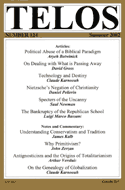 Could there really be such a thing as a “Christian” Nietzsche? Superficially, of course, there couldn’t be a thinker less Christian than Nietzsche. His savage critiques and well-known aphorisms about the servile, masochistic, and ugly character of Christian life have had a decisive influence on contemporary Western thought. His proclamations of God’s “death” and his analyses of ressentiment have even managed to lodge themselves firmly into popular culture. Nietzsche’s brutal hostility toward everything Christianity stands for is, for better or worse, one of the best-known aspects of his philosophy. It is, thus, rather fascinating that, in spite of this (or perhaps because of it), many theologians and philosophers have tried to answer this seemingly paradoxical question about a Christian Nietzsche in the affirmative. Could there really be such a thing as a “Christian” Nietzsche? Superficially, of course, there couldn’t be a thinker less Christian than Nietzsche. His savage critiques and well-known aphorisms about the servile, masochistic, and ugly character of Christian life have had a decisive influence on contemporary Western thought. His proclamations of God’s “death” and his analyses of ressentiment have even managed to lodge themselves firmly into popular culture. Nietzsche’s brutal hostility toward everything Christianity stands for is, for better or worse, one of the best-known aspects of his philosophy. It is, thus, rather fascinating that, in spite of this (or perhaps because of it), many theologians and philosophers have tried to answer this seemingly paradoxical question about a Christian Nietzsche in the affirmative.
Continue reading →
By Itai Farhi · Friday, November 4, 2011 As an occasional feature on TELOSscope, we highlight a past Telos article whose critical insights continue to illuminate our thinking and challenge our assumptions. Today, Itai Farhi looks at Anthony King’s “Baudrillard’s Nihilism and the End of Theory,” from Telos 112 (Summer 1998).
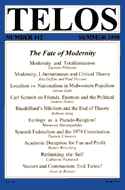 The discipline of critical theory, originating in the work of the Frankfurt School, attempts to move from pure description of society toward a critique of society with the goal of bringing about change. In recent years, this discipline has itself been criticized. One of the leaders of this anti-critical theory crusade was Jean Baudrillard, whose intellectual legacy in relation to the state of modern theory Anthony King evaluates in his article “Baudrillard’s Nihilism and the End of Theory.” The discipline of critical theory, originating in the work of the Frankfurt School, attempts to move from pure description of society toward a critique of society with the goal of bringing about change. In recent years, this discipline has itself been criticized. One of the leaders of this anti-critical theory crusade was Jean Baudrillard, whose intellectual legacy in relation to the state of modern theory Anthony King evaluates in his article “Baudrillard’s Nihilism and the End of Theory.”
Continue reading →
By David Ost · Tuesday, November 1, 2011 David Ost’s review of Victor Zaslavsky’s Class Cleansing: The Massacre at Katyn appears in Telos 156 (Fall 2011). Read the full review online at the TELOS Online website, or purchase a print copy of the issue here. Zaslavsky’s Class Cleansing is available for purchase here.
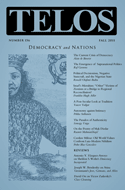 In this powerful short book on the horrific Soviet massacre of over 20,000 Polish reserve officers in 1940, Victor Zaslavsky utilizes recently opened Moscow archives to lay out what happened, and then argues that it was the result of a committed effort to wipe out a class. Unfortunately, that claim is not fully developed. Zaslavsky never specifies the identity of this class, and passes over the key role played by nationality. The fact that Ukrainian and Belarusian elite officers arrested from the same lands were spared—lands the Soviets were about to transfer from Polish to Soviet sovereignty—shows that not all elites were targeted equally, and that destroying those loyal to the now-dismantled Polish state (which in the pre-war period did constitute a genuine threat) was the primary consideration. The author’s equation of “classism” with “racism,” as just two different kinds of “discrimination,” is also challenged, on grounds that persecution based on the ascriptive characteristic of race differs fundamentally from efforts of class-based economic redistribution that most countries carry out, and that communist categories of class tended to be more fungible than Zaslavsky here allows. In this powerful short book on the horrific Soviet massacre of over 20,000 Polish reserve officers in 1940, Victor Zaslavsky utilizes recently opened Moscow archives to lay out what happened, and then argues that it was the result of a committed effort to wipe out a class. Unfortunately, that claim is not fully developed. Zaslavsky never specifies the identity of this class, and passes over the key role played by nationality. The fact that Ukrainian and Belarusian elite officers arrested from the same lands were spared—lands the Soviets were about to transfer from Polish to Soviet sovereignty—shows that not all elites were targeted equally, and that destroying those loyal to the now-dismantled Polish state (which in the pre-war period did constitute a genuine threat) was the primary consideration. The author’s equation of “classism” with “racism,” as just two different kinds of “discrimination,” is also challenged, on grounds that persecution based on the ascriptive characteristic of race differs fundamentally from efforts of class-based economic redistribution that most countries carry out, and that communist categories of class tended to be more fungible than Zaslavsky here allows.
Continue reading →
By Maxwell Woods · Monday, October 31, 2011 A Journal of No Illusions: Telos, Paul Piccone, and the Americanization of Critical Theory is now available from Telos Press. Maxwell Woods talked with contributor Scott McNall about the influence of Telos and Paul Piccone on his intellectual outlook.
Maxwell Woods: Your article “The Good, the Bad and the Ugly: A Retrospective on Telos” discussed Telos‘s development, from its beginnings in 1968 to its publicizing of Carl Schmitt, federalism, and populism. How did this article, and Telos more generally, fit into your intellectual world when you wrote the piece?
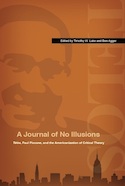 Scott McNall: When I wrote the piece, I was focused on the collapse of the economy, climate change, and the continued destruction of the biosphere on which human life depends. I wondered what it would be like if the Telos “gang” were all together again, what they would make of our current situation. I’m sure it would be more than just “We told you so.” I very much wished I could have found out from Paul Piccone what he thought about our current economic and biological crises, not because I would necessarily have agreed with him, but because I would have almost certainly been forced to deal with new ways of thinking about the problems. In writing the piece I also needed to go back over years of the journal; it was a treat and an opportunity to remember the debates, the good ideas, those that were not so useful, and the emotion and intellectual energy that fueled the entire Telos project. Scott McNall: When I wrote the piece, I was focused on the collapse of the economy, climate change, and the continued destruction of the biosphere on which human life depends. I wondered what it would be like if the Telos “gang” were all together again, what they would make of our current situation. I’m sure it would be more than just “We told you so.” I very much wished I could have found out from Paul Piccone what he thought about our current economic and biological crises, not because I would necessarily have agreed with him, but because I would have almost certainly been forced to deal with new ways of thinking about the problems. In writing the piece I also needed to go back over years of the journal; it was a treat and an opportunity to remember the debates, the good ideas, those that were not so useful, and the emotion and intellectual energy that fueled the entire Telos project.
Continue reading →
|
|