By Yaacov Yadgar · Friday, October 28, 2011 Yaacov Yadgar’s “A Post-Secular Look at Tradition: Toward a Definition of ‘Traditionism'” appears in Telos 156 (Fall 2011). Read the full version online at the TELOS Online website, or purchase a print copy of the issue here.
 Building on the “post-secular” turn in the interdisciplinary study of society, culture, history, and religion, this essay aims at refocusing the investigative gaze at tradition and the attitudes toward it. Originating from an interest in Israeli-Jews who decline to self-identify as either “secular” or “religious” and instead choose “masorti” (deriving from masoret, Hebrew for tradition) as the label of their religious identity, the essay attempts to present an interpretative, phenomenological discussion of tradition, traditionalism, and what is suggested here as the proper translation of masorti-ness, “traditionism.” The essay first reconstructs an understanding of tradition that stresses its constitutive, dialogical, dynamic, and contemporary nature. Building on this understanding of tradition the paper then investigates what academic literature often refers to as “traditionalism,” commonly understood to be marking a rigid, ultra-conservative, and totalizing view of tradition’s authority over the individual’s as well as the community’s life. Contrasting “traditionism” with this traditionalist ultra-conservatism, the essay suggests an outline for interpreting and understanding traditionism as a (late-) modern, self-reflective, practical, critical, and selective adherence to tradition. The essay argues that traditionism thus offers a viable post-secular alternative to the predominant notion of an inherent antinomy between modernity and tradition. Building on the “post-secular” turn in the interdisciplinary study of society, culture, history, and religion, this essay aims at refocusing the investigative gaze at tradition and the attitudes toward it. Originating from an interest in Israeli-Jews who decline to self-identify as either “secular” or “religious” and instead choose “masorti” (deriving from masoret, Hebrew for tradition) as the label of their religious identity, the essay attempts to present an interpretative, phenomenological discussion of tradition, traditionalism, and what is suggested here as the proper translation of masorti-ness, “traditionism.” The essay first reconstructs an understanding of tradition that stresses its constitutive, dialogical, dynamic, and contemporary nature. Building on this understanding of tradition the paper then investigates what academic literature often refers to as “traditionalism,” commonly understood to be marking a rigid, ultra-conservative, and totalizing view of tradition’s authority over the individual’s as well as the community’s life. Contrasting “traditionism” with this traditionalist ultra-conservatism, the essay suggests an outline for interpreting and understanding traditionism as a (late-) modern, self-reflective, practical, critical, and selective adherence to tradition. The essay argues that traditionism thus offers a viable post-secular alternative to the predominant notion of an inherent antinomy between modernity and tradition.
Continue reading →
By James Fowler · Wednesday, October 26, 2011 As an occasional feature on TELOSscope, we highlight a past Telos article whose critical insights continue to illuminate our thinking and challenge our assumptions. Today, James Folwer looks at Anton Oleinik’s “On Negative Convergence: The Metaphor of Vodka-Cola Reconsidered” from Telos 145 (Winter 2008).
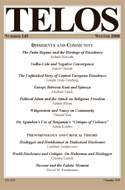 Since the fall of the Iron Curtain in 1990 there has been an accelerated process of negative convergence between the United States and Russia, encompassing transfers of knowledge, technologies, and institutions. The issue that Anton Oleinik tackles in “On Negative Convergence: The Metaphor of Vodka-Cola Reconsidered” is whether or not this process has helped us move toward a better, more inhabitant-friendly world. As Oleinik explains: “Change is bilateral: from the United States as well as to the United States. These transfers do not always contribute to improving the situation at either end of exchange. On the contrary, mechanisms of negative learning and mimicry operate that support a hypothesis of ‘negative convergence’: globalization in its current form produces a convergence of participating countries toward a constellation of common problems instead of moving toward a better world.” Since the fall of the Iron Curtain in 1990 there has been an accelerated process of negative convergence between the United States and Russia, encompassing transfers of knowledge, technologies, and institutions. The issue that Anton Oleinik tackles in “On Negative Convergence: The Metaphor of Vodka-Cola Reconsidered” is whether or not this process has helped us move toward a better, more inhabitant-friendly world. As Oleinik explains: “Change is bilateral: from the United States as well as to the United States. These transfers do not always contribute to improving the situation at either end of exchange. On the contrary, mechanisms of negative learning and mimicry operate that support a hypothesis of ‘negative convergence’: globalization in its current form produces a convergence of participating countries toward a constellation of common problems instead of moving toward a better world.”
Continue reading →
By Somogy Varga · Tuesday, October 25, 2011 Somogy Varga’s “The Paradox of Authenticity” appears in Telos 156 (Fall 2011). Read the full version online at the TELOS Online website, or purchase a print copy of the issue here.
The ideal of authenticity has become a prevalent ethical ideal with an immense impact on popular culture. Authenticity is no longer restricted to the periphery of philosophy, and prominent thinkers have recently reintroduced it as a central philosophical issue. However, contemporary accounts do not seem to pay sufficient attention to how the ideal of authenticity and certain practices in capitalism have shaped each other reciprocally. This essay attempts to make initial steps toward filling this gap.
Continue reading →
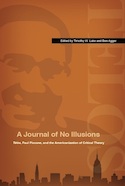
By Maxwell Woods · Monday, October 24, 2011 A Journal of No Illusions: Telos, Paul Piccone, and the Americanization of Critical Theory is now available from Telos Press. Maxwell Woods talked with contributor Robert D’Amico about his history with Telos and the journal’s influence on his intellectual outlook.
Maxwell Woods: How did your article “What is Federalism? On Piccone’s Late Political Philosophy” fit into your own intellectual outlook?
 Robert D’Amico: I have always been interested in political philosophy in the widest sense of that term. Telos was born out of a focus on Marx and Marxism as political theories within European philosophy. Like the journal, I abandoned that framework in time, before the journal did I think, but it did me a lot of good to think through those issues and the journal made some of the more interesting work on it available. The focus on federalism and populism came late in Paul’s life. I can’t say that they are part of my thinking, but writing this piece gave me an opportunity to work through what Paul and I often talked about in the times I saw him in NYC before his death. Also I think that is what Paul would have liked, not a remembrance of him but an argument. Robert D’Amico: I have always been interested in political philosophy in the widest sense of that term. Telos was born out of a focus on Marx and Marxism as political theories within European philosophy. Like the journal, I abandoned that framework in time, before the journal did I think, but it did me a lot of good to think through those issues and the journal made some of the more interesting work on it available. The focus on federalism and populism came late in Paul’s life. I can’t say that they are part of my thinking, but writing this piece gave me an opportunity to work through what Paul and I often talked about in the times I saw him in NYC before his death. Also I think that is what Paul would have liked, not a remembrance of him but an argument.
Continue reading →
By Pekka Sulkunen · Friday, October 21, 2011 Pekka Sulkunen’s “Autonomy against Intimacy: On the Problem of Governing Lifestyle-Related Risks” appears in Telos 156 (Fall 2011). Read the full version online at the TELOS Online website, or purchase a print copy of the issue here.
Most risk society analyses focus on external risks caused by production, neglecting internal risks produced by consumption. Tobacco, alcohol, obesity, lack of exercise, and other lifestyle-related causes are top global burdens of health, growing with emerging consumer society outside western capitalism. Modern societies have a poor track record in regulating these risks. Neo-liberal hegemony is a weak explanation of the failure. We must see the issue as a problem of justification. Modern social order is founded on individual biography, autonomy, and intimacy as principles of human worth. The twentieth-century modern state has guided the progress to make these ideals reality. Autonomy, the right to individual self-control, has supported the right to intimacy, experience of life as unique and separate from other lives. Today, only quite recently, these principles of worth are fully matured, but autonomy and intimacy are now conflicting. One person’s uniqueness—the pleasure of consumption or cultural identity—is felt to tax the autonomy of others. Vice versa, the autonomy of the majority cuts into the uniqueness of the few. The state has lost its pastoral role to lead the flock to progress, and become apostolic authority merely instructing the faithful on health, security, and well-being from a distance.
Continue reading →
By Rusmir Mahmutćehajić · Tuesday, October 18, 2011 Rusmir Mahmutćehajić’s “On the Poetry of Mak Dizdar: The Poet, the Road, and the Word” appears in Telos 156 (Fall 2011). Read the full version online at the TELOS Online website, or purchase a print copy of the issue here.
This essay investigates certain key ontological, cosmological, anthropological, and psychological aspects of Mak Dizdar’s Stone Sleeper, the best-known poetic work of the Slavic south. Written during the 1960s, the book was recognized immediately on publication as an authentic voice of perennial wisdom finding expression through major elements of Bosnian culture. Although distorted and obscured in modern ideological perspectives, the idea of “Bosnian Culture” preserves nearly all the vital elements of perennial wisdom. The poet’s confident expression of this wisdom is, in the author’s view, his witness to the need for dialogue between interlocutors of both the traditional and modern viewpoints that can assist our exit from confusion and ideological reductionism. In spite of its origins during the period of Communist totalitarianism, Stone Sleeper presents a clear picture of how human openness to the principle of existence, which transcends any and all ideological construction, is and remains irreducible to closed form. This book has been recognized as both a supreme achievement and a crucial moment in the poetry of the Slavic south, confirming Bosnia’s centrality to and rich impact upon that complex whole.
Continue reading →
|
|