By Telos Press · Tuesday, April 20, 2021 In today’s episode of the Telos Press Podcast, David Pan talks with David A. Westbrook about his article “Social Capitalism: A Descriptive Sketch,” from Telos 194 (Spring 2021). An excerpt of the article appears here, and we are providing free open access to the full article at the Telos Online website. To learn how your university can subscribe to Telos, visit our library recommendation page. Print copies of Telos 194 are available for purchase in our online store.
Listen to the podcast here.
Continue reading →
By Telos Press · Thursday, April 8, 2021  On The Caravan Podcast at the Hoover Institution, Russell Berman talks with political scientist Matthias Küntzel about the potential return of the United States to the Iran Deal, Germany’s long-standing special relationship with Iran, anti-Americanism in Europe, and the anti-Semitism of the Iranian regime. Listen to the podcast here. Küntzel is the author of Germany and Iran: From the Aryan Axis to the Nuclear Threshold (Telos Press, 2014), which examines why the history of the special relationship between Germany and Iran is critical to understanding the ongoing controversy over Iran’s nuclear program. Both Germany and Iran and Küntzel’s earlier book Jihad and Jew-Hatred: Islamism, Nazism, and the Roots of 9/11 are available in our online store for 25% off the list price. Küntzel’s articles for Telos are also available at our online archive. On The Caravan Podcast at the Hoover Institution, Russell Berman talks with political scientist Matthias Küntzel about the potential return of the United States to the Iran Deal, Germany’s long-standing special relationship with Iran, anti-Americanism in Europe, and the anti-Semitism of the Iranian regime. Listen to the podcast here. Küntzel is the author of Germany and Iran: From the Aryan Axis to the Nuclear Threshold (Telos Press, 2014), which examines why the history of the special relationship between Germany and Iran is critical to understanding the ongoing controversy over Iran’s nuclear program. Both Germany and Iran and Küntzel’s earlier book Jihad and Jew-Hatred: Islamism, Nazism, and the Roots of 9/11 are available in our online store for 25% off the list price. Küntzel’s articles for Telos are also available at our online archive.
Continue reading →
By Telos Press · Monday, March 22, 2021 To read more in depth from Telos, subscribe to the journal here.
On The Agenda with Steve Paikin, the discussion about governmental responses to the COVID-19 pandemic turned to Thomas Brussig’s recent editorial “Risk More Dictatorship,” originally published in the Süddeutsche Zeitung and translated into English in TelosScope. Listen to the discussion here, and read Brussig’s full essay here, along with Russell Berman’s commentary on it here.
Continue reading →
By Telos Press · Thursday, March 18, 2021 To read more in depth from Telos, subscribe to the journal here.
In today’s episode of the Telos Press Podcast, Camelia Raghinaru talks with F. Cartwright Weiland about his article “Reflections of a Rapporteur,” one of a group of essays from Telos 192 (Fall 2020) on the U.S. State Department’s Commission on Unalienable Rights. An excerpt of the article appears here. If your university has an online subscription to Telos, you can read the full article at the Telos Online website. For non-subscribers, learn how your university can begin a subscription to Telos at our library recommendation page. Purchase a print copy of Telos 192 in our online store.
Listen to the podcast here.
Continue reading →
By Telos Press · Thursday, March 11, 2021 To read more in depth from Telos, subscribe to the journal here.
Writing in the Wall Street Journal, Tunku Varadarajan talks with Elham Manea about Switzerland’s recent decision to prohibit the wearing of full facial coverings in public, thereby restricting the burqa and the niqab. Manea’s new book The Perils of Nonviolent Islamism, which investigates the broader context of this decision in comprehensive detail, is now available from Telos Press in our online store for 20% off the list price.
An excerpt from the article:
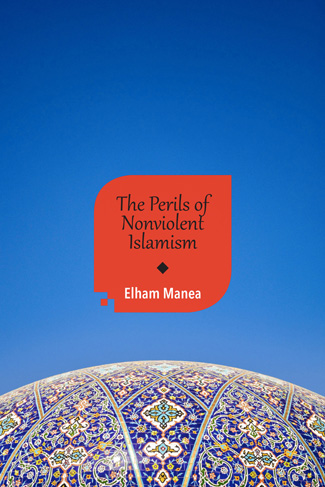 European democracies differ from America’s in notable ways, and many Americans have reservations about the Swiss prohibition: Aren’t burqa bans an illiberal curbing of religious and expressive freedom? By some reports, fewer than 100 women in Switzerland wear the burqa. Do they constitute so great a threat to the venerable Swiss nation that their constitution, which guarantees freedom of faith and conscience, has to be amended to alter their sartorial practice? European democracies differ from America’s in notable ways, and many Americans have reservations about the Swiss prohibition: Aren’t burqa bans an illiberal curbing of religious and expressive freedom? By some reports, fewer than 100 women in Switzerland wear the burqa. Do they constitute so great a threat to the venerable Swiss nation that their constitution, which guarantees freedom of faith and conscience, has to be amended to alter their sartorial practice?
Aware that judgments from afar can sometimes be glib, I put these questions to Elham Manea, author of a book published last month titled The Perils of Nonviolent Islamism. . . . Ms. Manea is quick to dismiss the argument that the ban curbs freedom. You can’t separate the burqa and niqab from their “religious and political contexts” and turn this into “a simple question of ‘choice.'” The burqa didn’t “come out of nowhere” and Muslim women haven’t “decided to embrace it on a whim.” Many Western feminists, she says, tend to “neutralize the context, as if it is of no consequence.” She urges those who are squeamish about the ban to ask which ideology teaches women to cover themselves completely. What are its theological features? What does it say about women?
Continue reading →
By Telos Press · Tuesday, February 23, 2021 To read more in depth from Telos, subscribe to the journal here.
Writing at the Investigative Project on Terrorism website, Phyllis Chesler reviews Elham Manea’s The Perils of Nonviolent Islamism, now available from Telos Press. Save 20% off the list price when you purchase your copy in our store.
An excerpt of the review:
In The Perils of Nonviolent Islamism, her fourth book in English, the University of Zurich political scientist, author, activist, and consultant offers a warning to the West.
In Manea’s view, “nonviolent Islamism” is the basic building block that leads to violent jihad. And our misreading of that reality can lead to real harm.
If we continue “cancelling” politically incorrect ideas and speech, continue “vilifying dissent,” and “insisting upon the infinite guilt of the West” then, as Russell A. Berman writes in the foreword to this work, “we should expect the real-world consequences of this ideology soon to become clearer and rougher.” Manea believes that repressing dissent can easily turn into repressive practices. “Cancel culture” may indeed be our “Islamism.”
Nonviolent Islamism’s insidious nature is one of Manea’s most important points. Westerners have been hopelessly gullible in their choice of “smiling and patient” Saudi-funded Muslim Brotherhood/Salafi representatives as their go-to experts on both Islam and Muslims.
“One cannot combat an ideology and fundamentalism by working with the very groups that promote that ideology,” she writes. Further, Western cultural relativism and doctrines of “multiculturalism” has served us and freedom-loving Muslims very, very poorly.
This battle, she writes, is “the global challenge of the 21st century.”
Continue reading →
|
|