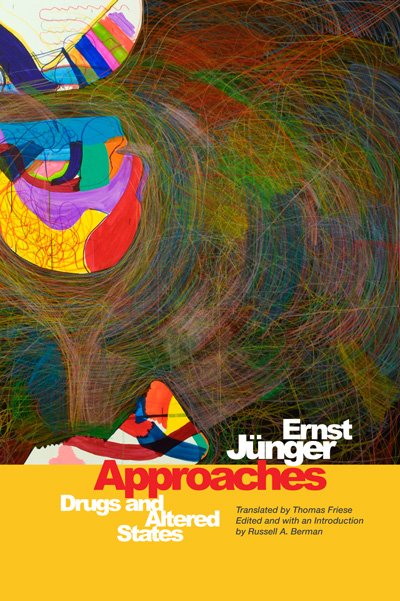
By Telos Press · Friday, August 8, 2014 Writing in the current issue of Modern Age (Summer 2014), Tobias J. Lanz reviews Ernst Jünger’s The Forest Passage:
This is a book about freedom. It was first published in 1951 as a response to the Nazi experience and the perceived threat of Soviet expansion. Its explicit focus was resistance to the totalitarian state. Yet its implicit focus is resistance to all forms of social control, including the soft totalitarianism of present-day mass democracy. And this why Ernst Jünger’s classic remains relevant today, and that is why Telos Press has reissued it. . . .
Continue reading →
By Telos Press · Monday, July 21, 2014  In his forthcoming book The New Class Conflict, Joel Kotkin explores how the familiar social and political categories of the twentieth century—left and right, liberal and conservative—no longer correspond to the emerging divisions of the present day. Kotkin’s analysis insead focuses on the ascendency of two classes: the tech Oligarchy, based in Silicon Valley; and the Clerisy, which includes much of the nation’s policy, media, and academic elites. The New Class Conflict is written largely from the point of view of those who are, to date, the losers in this class conflict: the middle class. This group, which Kotkin calls the Yeomanry, has been the traditional bulwark of American society, politics, and economy. Yet under pressure from the ascendant Oligarchs and ever more powerful Clerisy, their prospects have diminished the American dream of class mobility that has animated its history and sustained its global appeal. In his forthcoming book The New Class Conflict, Joel Kotkin explores how the familiar social and political categories of the twentieth century—left and right, liberal and conservative—no longer correspond to the emerging divisions of the present day. Kotkin’s analysis insead focuses on the ascendency of two classes: the tech Oligarchy, based in Silicon Valley; and the Clerisy, which includes much of the nation’s policy, media, and academic elites. The New Class Conflict is written largely from the point of view of those who are, to date, the losers in this class conflict: the middle class. This group, which Kotkin calls the Yeomanry, has been the traditional bulwark of American society, politics, and economy. Yet under pressure from the ascendant Oligarchs and ever more powerful Clerisy, their prospects have diminished the American dream of class mobility that has animated its history and sustained its global appeal.
Continue reading →
By Telos Press · Tuesday, July 15, 2014 At the National Review Online, Fred Bauer explores the rise of neofeudalism in American society, and in doing so he draws explicitly on the writings of Joel Kotkin, whose forthcoming book The New Class Crisis will be published by Telos Press on September 1. Pre-order your copy of The New Class Crisis today, and we will ship it as soon as it becomes available.
Continue reading →
By Linas Jokubaitis · Tuesday, July 15, 2014 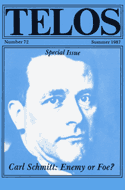 In “The Source of the Tragic,” Carl Schmitt developed an original interpretation of The Tragedy of Hamlet, Prince of Denmark rooted in his sociological understanding of the relationship between art and contemporary politics in Shakespeare’s tragedy. According to the German jurist, one can fully understand and appreciate this masterpiece only by taking into consideration the concrete political situation at the end of the reign of the Tudor dynasty and the intense struggles for legitimacy and authority in which Shakespeare created his theatrical works. In “The Source of the Tragic,” Carl Schmitt developed an original interpretation of The Tragedy of Hamlet, Prince of Denmark rooted in his sociological understanding of the relationship between art and contemporary politics in Shakespeare’s tragedy. According to the German jurist, one can fully understand and appreciate this masterpiece only by taking into consideration the concrete political situation at the end of the reign of the Tudor dynasty and the intense struggles for legitimacy and authority in which Shakespeare created his theatrical works.
Continue reading →
By Telos Press · Monday, July 14, 2014 Telos Press Publishing is happy to announce that Joel Kotkin’s The New Class Conflict is now available for pre-order. The book will be released on September 1, 2014.Pre-order your copy here, and we will ship it as soon as it becomes available.
Continue reading →
By Lewis West · Tuesday, July 1, 2014  Utopia is necessary: it alone “can rescue a very limited reality” (16). Without it we are shackled by the thoughts of others, confined within realms of possibility defined by those in power. Peace, disarmament—both can seem idealistic, even ridiculous. But our incredulity results not only from the distance of these concepts from the everyday. We have been taught to understand pacifism as impractical, disarmament as suicide. Utopia is necessary: it alone “can rescue a very limited reality” (16). Without it we are shackled by the thoughts of others, confined within realms of possibility defined by those in power. Peace, disarmament—both can seem idealistic, even ridiculous. But our incredulity results not only from the distance of these concepts from the everyday. We have been taught to understand pacifism as impractical, disarmament as suicide.
Continue reading →
|
|