By Beau Mullen · Tuesday, December 10, 2013 As an occasional feature on TELOSscope, we highlight a past Telos article whose critical insights continue to illuminate our thinking and challenge our assumptions. Today, Beau Mullen looks at Norman Naimark’s “Totalitarian States and the History of Genocide” from Telos 136 (Fall 2006).
 The twentieth century was witness to no shortage of political violence and mass death perpetrated by the state. The two most well-known genocides of the century—those that occurred under the rule of Nazi Germany and the Stalinist Soviet Union—did not occur because the state broke down and lawlessness prevailed. Quite the contrary: both regimes had complete control over their citizenry, and the apparatus of government was used to make the butchery as efficient and as inescapable as possible. Both regimes were characterized by extreme violence and terror, key elements of the totalitarian system as defined by Hannah Arendt, so it seems only logical that totalitarianism increases the potential for genocide. The twentieth century was witness to no shortage of political violence and mass death perpetrated by the state. The two most well-known genocides of the century—those that occurred under the rule of Nazi Germany and the Stalinist Soviet Union—did not occur because the state broke down and lawlessness prevailed. Quite the contrary: both regimes had complete control over their citizenry, and the apparatus of government was used to make the butchery as efficient and as inescapable as possible. Both regimes were characterized by extreme violence and terror, key elements of the totalitarian system as defined by Hannah Arendt, so it seems only logical that totalitarianism increases the potential for genocide.
Continue reading →
By Telos Press · Wednesday, December 4, 2013  The Telos-Paul Piccone Institute is pleased to announce its second biennial colloquium in L’Aquila, Italy. The theme of the conference will be “The Idea of Europe.” A full description of the conference, as well as the call for papers, is available on the Institute’s website. The Telos-Paul Piccone Institute is pleased to announce its second biennial colloquium in L’Aquila, Italy. The theme of the conference will be “The Idea of Europe.” A full description of the conference, as well as the call for papers, is available on the Institute’s website.
Continue reading →
By Linas Jokubaitis · Tuesday, December 3, 2013 As an occasional feature on TELOSscope, we highlight a past Telos article whose critical insights continue to illuminate our thinking and challenge our assumptions. Today, Linas Jokubaitis looks at Joseph Bendersky’s “Carl Schmitt and the Conservative Revolution” from Telos 72 (Summer 1987).
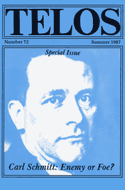 In his last book, Political Theology II, Carl Schmitt wrote that some books are fated to become academic legends, but contrary to the etymological meaning of the word Legende, they are not read, only cited. He knew that his persona was surrounded by many mythologies and that after his death an even greater complex of mythologies would develop around his personality and works. Today there seems to be no end to the multiplication of legends about Schmitt. Joseph Bendersky’s essay “Carl Schmitt and the Conservative Revolution” is a meticulous attempt to understand if there is any truth in the popular legend, according to which Schmitt belonged to a diverse group of intellectuals who were labeled as conservative revolutionaries. In his last book, Political Theology II, Carl Schmitt wrote that some books are fated to become academic legends, but contrary to the etymological meaning of the word Legende, they are not read, only cited. He knew that his persona was surrounded by many mythologies and that after his death an even greater complex of mythologies would develop around his personality and works. Today there seems to be no end to the multiplication of legends about Schmitt. Joseph Bendersky’s essay “Carl Schmitt and the Conservative Revolution” is a meticulous attempt to understand if there is any truth in the popular legend, according to which Schmitt belonged to a diverse group of intellectuals who were labeled as conservative revolutionaries.
Continue reading →
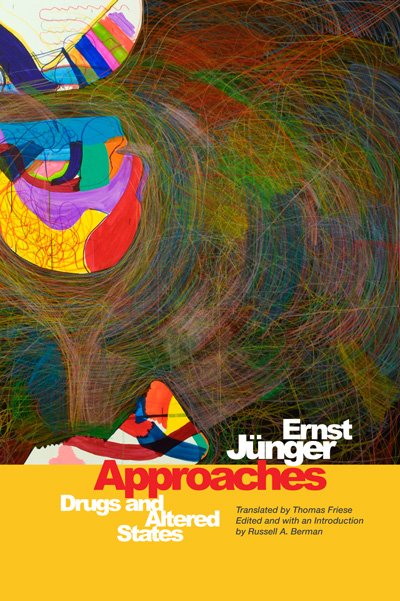
By Telos Press · Monday, December 2, 2013  Telos Press is pleased to announce the publication of Ernst Jünger’s The Forest Passage, now available for purchase in our online store. Expertly translated by Thomas Friese, who previously translated Jünger’s The Adventurous Heart, and with an introduction by Russell A. Berman, this key text from Jünger’s oeuvre is finally accessible to English-language readers. Telos Press is pleased to announce the publication of Ernst Jünger’s The Forest Passage, now available for purchase in our online store. Expertly translated by Thomas Friese, who previously translated Jünger’s The Adventurous Heart, and with an introduction by Russell A. Berman, this key text from Jünger’s oeuvre is finally accessible to English-language readers.
Continue reading →
By Telos Press · Sunday, December 1, 2013 Chantal Bax’s Subjectivity After Wittgenstein: The Post-Cartesian Subject and the “Death of Man” is now available in paperback from Bloomsbury Academic. Although Wittgenstein is often held co-responsible for the so-called death of man as it was pronounced in the course of the previous century, no detailed description of his alternative to the traditional or Cartesian account of human being has so far been available. By consulting several parts of Wittgenstein’s later oeuvre, Subjectivity after Wittgenstein aims to fill this gap.
Continue reading →
By Matthias Küntzel · Monday, November 25, 2013 HAMBURG, November 24, 2013—During the night of November 24, 2013, it came to this: The five permanent members of the Security Council and Germany signed an interim agreement that accepts the plutonium facility at Arak and approves Iran’s continued uranium enrichment. “This deal appears to provide the world’s leading sponsor of terrorism with billions of dollars in exchange for cosmetic concessions,” criticized Senator Mark Kirk (R-Illinois).
Continue reading →
|
|