By Paul Rekret · Thursday, January 3, 2013 Paul Rekret’s “The Impasse of Post-Metaphysical Political Theory: On Derrida and Foucault ” appears in Telos 161 (Winter 2012). Read the full version online at the Telos Online website, or purchase a print copy of the issue in our store.
 The debate between Jacques Derrida and Michel Foucault over the status of Descartes’ Meditations can be read to indicate some profound implications for the ways by which we conceive of a post-metaphysical political theory. This article documents the way in which the terms of the debate suggest that in conceiving politics after metaphysics in terms of competing accounts of the contingency of Being or, in Stephen White’s words, as weak ontologies, we are lead towards a profound paradox and impasse. To suggest that there is broad agreement in post-metaphysical political thought regarding the instability of ontology and the consequent theoretical task of questioning the grounds or foundations of particular political concepts or institutions is to overlook a fundamental paradox. What the debate between Derrida and Foucault in fact indicates is that these differing weak ontologies are in fact incommensurable with one another. The debate between Jacques Derrida and Michel Foucault over the status of Descartes’ Meditations can be read to indicate some profound implications for the ways by which we conceive of a post-metaphysical political theory. This article documents the way in which the terms of the debate suggest that in conceiving politics after metaphysics in terms of competing accounts of the contingency of Being or, in Stephen White’s words, as weak ontologies, we are lead towards a profound paradox and impasse. To suggest that there is broad agreement in post-metaphysical political thought regarding the instability of ontology and the consequent theoretical task of questioning the grounds or foundations of particular political concepts or institutions is to overlook a fundamental paradox. What the debate between Derrida and Foucault in fact indicates is that these differing weak ontologies are in fact incommensurable with one another.
Continue reading →
By David Pan · Wednesday, January 2, 2013 The following paper was presented at Telos in Europe: The L’Aquila Conference, held on September 7-9, 2012, in L’Aquila, Italy.
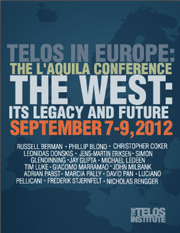 Since the Treaty of Westphalia, sovereignty in the West has been imagined in terms of the nation-state and its ability to provide a universal basis for political relations both within state boundaries and in relations with other similarly organized entities. On the one hand, the nation-state originates as a means of overcoming the religious civil wars, and its establishment coincides with the attempt to relegate theological disputes to a private sphere that does not threaten the structure of the state. In this way, the state as opposed to the church becomes the primary form for defining the political. On the other hand, the development and stability of the nation-state system seems to have been inextricably linked to the dynamic of colonialism. As Carl Schmitt lays out in The Nomos of the Earth, the establishment of a jus publicum europaeum that created guidelines for limiting war between European states was accompanied and indeed predicated upon a complementary establishment of the amity lines that distinguished Europe from the rest of the world as the place of such limited war as against the “freedom” of the spaces beyond the line in which restrictions on warfare did not apply. For Schmitt, the relationship between these two dynamics, the coalescence of nation-state relations in Europe on the basis of a limitation of war and the establishment of unlimited war in those areas outside of Europe without nation-state structures, has not been coincidental but in fact constitutive for both the rise of the West and the structure of international relations in the modern world. Since the Treaty of Westphalia, sovereignty in the West has been imagined in terms of the nation-state and its ability to provide a universal basis for political relations both within state boundaries and in relations with other similarly organized entities. On the one hand, the nation-state originates as a means of overcoming the religious civil wars, and its establishment coincides with the attempt to relegate theological disputes to a private sphere that does not threaten the structure of the state. In this way, the state as opposed to the church becomes the primary form for defining the political. On the other hand, the development and stability of the nation-state system seems to have been inextricably linked to the dynamic of colonialism. As Carl Schmitt lays out in The Nomos of the Earth, the establishment of a jus publicum europaeum that created guidelines for limiting war between European states was accompanied and indeed predicated upon a complementary establishment of the amity lines that distinguished Europe from the rest of the world as the place of such limited war as against the “freedom” of the spaces beyond the line in which restrictions on warfare did not apply. For Schmitt, the relationship between these two dynamics, the coalescence of nation-state relations in Europe on the basis of a limitation of war and the establishment of unlimited war in those areas outside of Europe without nation-state structures, has not been coincidental but in fact constitutive for both the rise of the West and the structure of international relations in the modern world.
Continue reading →
By J. F. Dorahy · Monday, December 31, 2012 As an occasional feature on TELOSscope, we highlight a past Telos article whose critical insights continue to illuminate our thinking and challenge our assumptions. Today, J. F. Dorahy looks at Georg Lukács’s “The Dialectic of Labor: Beyond Causality and Teleology,” from Telos 6 (Fall 1970).
 Georg Lukács’s essay “The Dialectic of Labor” belongs to the last period of his life and was composed in the context of the so-called “renaissance of Marxism”: a movement, beginning in the mid-1950s, within several of the Eastern Bloc nations—most notably Hungary, Poland, and the former Yugoslavia—that sought to re-energize the humanistic dimensions of Marxism suppressed by the enforcement of orthodoxy. Lukács’s substantive contribution to the “renaissance of Marxism” took the form of two enormous projects: a Marxist ontology (Zur Ontologie des gesellschaftichen Seins) and a systematic aesthetics (Die Eigenart des Ästhetischen). Although Lukács’s relationship to “dialectical and historical materialism” remains complex, “The Dialectic of Labor” stands as a reflection of this humanistic tendency inasmuch as it, by way of an ontological elucidation of the “philosophy of praxis,” emphasizes the functional role of subjectivity as a constitutive moment in the social-historical process. Georg Lukács’s essay “The Dialectic of Labor” belongs to the last period of his life and was composed in the context of the so-called “renaissance of Marxism”: a movement, beginning in the mid-1950s, within several of the Eastern Bloc nations—most notably Hungary, Poland, and the former Yugoslavia—that sought to re-energize the humanistic dimensions of Marxism suppressed by the enforcement of orthodoxy. Lukács’s substantive contribution to the “renaissance of Marxism” took the form of two enormous projects: a Marxist ontology (Zur Ontologie des gesellschaftichen Seins) and a systematic aesthetics (Die Eigenart des Ästhetischen). Although Lukács’s relationship to “dialectical and historical materialism” remains complex, “The Dialectic of Labor” stands as a reflection of this humanistic tendency inasmuch as it, by way of an ontological elucidation of the “philosophy of praxis,” emphasizes the functional role of subjectivity as a constitutive moment in the social-historical process.
Continue reading →
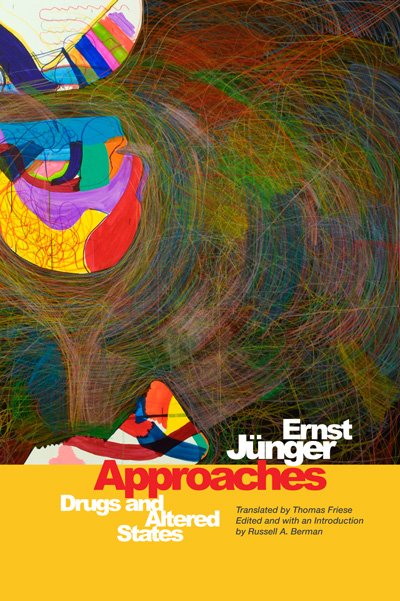
By Telos Press · Wednesday, December 19, 2012 Gary Lachman reviews Ernst Jünger’s The Adventurous Heart for Reality Sandwich:
 The Adventurous Heart is a collection of short essays, thoughts, stories, dreams, philosophical musings, and other unclassifiable writings on a number of experiences: nature, death, travel, sex, drugs, antique shops, museums, practically anything that caught Jünger’s ever inquisitive eye. It provides, as Jünger says, “small models of another way of seeing things.” This “other way” is what Jünger calls “stereoscopy,” the ability to see things in a dual aspect, perceiving their surface and depth simultaneously. . . . Jünger’s “stereoscopy” revealed to him the “secret correspondences existing between things,” and his reflections, written in an elegant, often lapidary style, trigger in the attentive reader a similar effect. The Adventurous Heart is a collection of short essays, thoughts, stories, dreams, philosophical musings, and other unclassifiable writings on a number of experiences: nature, death, travel, sex, drugs, antique shops, museums, practically anything that caught Jünger’s ever inquisitive eye. It provides, as Jünger says, “small models of another way of seeing things.” This “other way” is what Jünger calls “stereoscopy,” the ability to see things in a dual aspect, perceiving their surface and depth simultaneously. . . . Jünger’s “stereoscopy” revealed to him the “secret correspondences existing between things,” and his reflections, written in an elegant, often lapidary style, trigger in the attentive reader a similar effect.
Continue reading →
By James Santucci · Tuesday, December 18, 2012 As an occasional feature on TELOSscope, we highlight a past Telos article whose critical insights continue to illuminate our thinking and challenge our assumptions. Today, James Santucci looks at Karel Kosík’s “Our Present Crisis” from Telos 13 (Fall 1972).
 Karel Kosík’s story begins with the end of a statue. In 1962, a granite statue of Stalin that had been begun in 1955 was completed only to be torn down several months later. For Kosík, the statue, “designed to last forever,” perfectly represented the provisionalism and nihilism of modern times. It laid bare the inescapable tension between living peacefully in social life and the animal brutality that occasionally became necessary. When the statue was torn down, the base was left behind. In Kosík’s time, there were plans to transform the space into a garden restaurant. The restaurant’s relationship to its past would be complicated, but plans were scrapped, which saved any Prague tourists from the awkwardness of “Would you like to see our drink menu while you contemplate what it means to live under threat of random and instantaneous erasure?” Karel Kosík’s story begins with the end of a statue. In 1962, a granite statue of Stalin that had been begun in 1955 was completed only to be torn down several months later. For Kosík, the statue, “designed to last forever,” perfectly represented the provisionalism and nihilism of modern times. It laid bare the inescapable tension between living peacefully in social life and the animal brutality that occasionally became necessary. When the statue was torn down, the base was left behind. In Kosík’s time, there were plans to transform the space into a garden restaurant. The restaurant’s relationship to its past would be complicated, but plans were scrapped, which saved any Prague tourists from the awkwardness of “Would you like to see our drink menu while you contemplate what it means to live under threat of random and instantaneous erasure?”
Continue reading →
By Danilo Breschi · Friday, December 14, 2012 This paper was presented at Telos in Europe: The L’Aquila Conference, held on September 7-9, 2012, in L’Aquila, Italy.
It is with Tocqueville that the term democracy acquires a positive connotation. When the first part of Democracy in America appeared in 1835, the very title came as a surprise. It was radically new, and it struck people like a bolt from the blue. Tocqueville took another unprecedented step when he associated democracy and equality. According to Aristotle, equality is an aspect of justice, not democracy. The equality that Tocqueville had in mind was not political or economic, but social; it referred to a social condition arising from equality of condition and from a pervasive egalitarian ethos. The latter reflected, in turn, the absence of a feudal past in the New World. Back in Europe and France, Tocqueville lived through the events of 1848, when the notion of “revolution” gained a socialist character. It is at such point that Tocqueville perceives a conflict between socialism and liberty: socialism means equality without liberty, while democracy stands for equality and freedom. He thus starts a new debate, that of the problematic relationship between equality and liberty, which draws on his dual political experiences in Europe and America. He discovers that it is through their synthesis that a political system capable of combining the best aspects of liberty and equality might emerge. Liberal democracy could therefore be born of the encounter between Europe and America, that is to say, the two main parts of the Western World.
Continue reading →
|
|