By Andre Freudenberg · Thursday, December 6, 2012 No doubt, there are successful moderate right-wing conservative parties all over Europe. Their names may be different, but they have one thing in common: they grow stronger while forcing government to alter policies and solve problems caused by illegal immigration and tendencies toward more centralization within the European Union. Therefore, it becomes more and more difficult to eliminate public debate about those and other topics.
However, there is one big exception: Germany. A party comparable to the Austrian Freedom Party still doesn’t exist there. The five “big players” that are represented in the Bundestag (the national parliament) and in the Landtag (the federal state parliaments) are either left-wing or at the center. One example is the Christian Democratic Union (CDU), which is part of the current government coalition together with the Free Democratic Party (FDP). One may assume that only a small minority of the electorate sympathizes with the agenda of staunchly conservative groups. But surveys conducted last year strongly refute this assumption.
Continue reading →
By Marcia Pally · Wednesday, December 5, 2012 This paper was presented at Telos in Europe: The L’Aquila Conference, held on September 7-9, 2012, in L’Aquila, Italy.
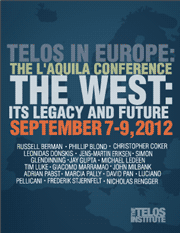 Whatever the ostensible theme of the September 2012 Telos conference, it seems the real one was the mess in the West. Has the West lost its pizzazz, gravitas, ability to guide? Have we become too secular, merely rational, and thus paradoxically ungrounded? Or are we not rational enough, our politics and economics still beset by emotional, quasi-religious beliefs? Whatever the ostensible theme of the September 2012 Telos conference, it seems the real one was the mess in the West. Has the West lost its pizzazz, gravitas, ability to guide? Have we become too secular, merely rational, and thus paradoxically ungrounded? Or are we not rational enough, our politics and economics still beset by emotional, quasi-religious beliefs?
From my perch, the West hasn’t lost anything but rather has gotten too much of what might be a good thing were there less of it. That thing is separability, and too much of it, untempered by situatedness, yields abandonment and anomie on one hand and selfishness on the other. Of course, too much situatedness would be equally damaging—oppressive and stultifying. It is the binary choice—separabilty or situatedness—that leads the West to the worst of itself. Thus what is needed are frameworks that foster the simultaneous presence of both. Here I’ll point to one, theologies of relationality.
Continue reading →
By Maja Sidzinska · Tuesday, December 4, 2012 As an occasional feature on TELOSscope, we highlight a past Telos article whose critical insights continue to illuminate our thinking and challenge our assumptions. Today, Maja Sidzinska looks at Alessandro Pizzorno’s “On the Rationality of Democratic Choice” from Telos 63 (Spring 1985).
 To presume that individual interests precede political action is not only to place the proverbial cart before the horse, it is to formulate a theory of social agency based on a belief in sequential phenomena sans justification for the particular sequence proposed. In “On the Rationality of Democratic Choice,” Alessandro Pizzorno argues that the system of political actions and interests is an annular one, which is why utilitarian and rational choice theories lack sufficient explanatory value. He proposes the goal of affirmation of socio-political identity is an alternative explanation of political action that does not speak the traditional language of costs and benefits, as that language is housed within a universalizing framework that doesn’t reflect reality. To presume that individual interests precede political action is not only to place the proverbial cart before the horse, it is to formulate a theory of social agency based on a belief in sequential phenomena sans justification for the particular sequence proposed. In “On the Rationality of Democratic Choice,” Alessandro Pizzorno argues that the system of political actions and interests is an annular one, which is why utilitarian and rational choice theories lack sufficient explanatory value. He proposes the goal of affirmation of socio-political identity is an alternative explanation of political action that does not speak the traditional language of costs and benefits, as that language is housed within a universalizing framework that doesn’t reflect reality.
Continue reading →
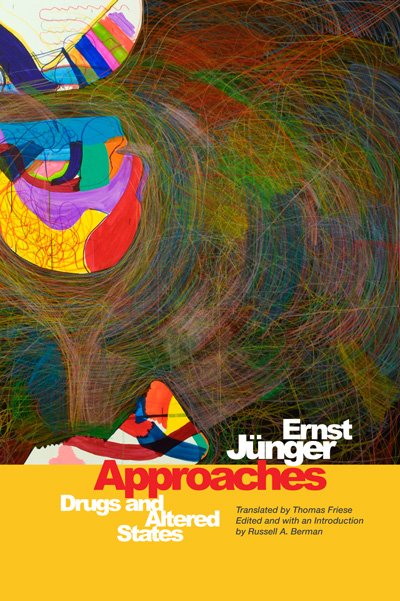
By Telos Press · Monday, December 3, 2012 The following review of Ernst Jünger’s The Adventurous Heart: Figures and Capriccios appeared in the November edition of The Midwest Book Review‘s Small Press Bookwatch.
 Psychology is the study of human thought and processes, and all around the world people have brought different perspectives together for a better and more complete understanding of it all. The Adventurous Heart: Figures and Capriccios is an English translation of the 1938 German psychological writer Ernst Jünger who wrote on his perspective of the mind and what we seek in life, touching on the nature of intuition. Revered throughout the literary and psychological international communities, The Adventurous Heart is a strong read for those who want a better understanding of the man who saw much in his time of turmoil. Psychology is the study of human thought and processes, and all around the world people have brought different perspectives together for a better and more complete understanding of it all. The Adventurous Heart: Figures and Capriccios is an English translation of the 1938 German psychological writer Ernst Jünger who wrote on his perspective of the mind and what we seek in life, touching on the nature of intuition. Revered throughout the literary and psychological international communities, The Adventurous Heart is a strong read for those who want a better understanding of the man who saw much in his time of turmoil.
Ernst Jünger’s The Adventurous Heart is available for purchase here.
Continue reading →
By Yonathan Listik · Tuesday, November 27, 2012 As an occasional feature on TELOSscope, we highlight a past Telos article whose critical insights continue to illuminate our thinking and challenge our assumptions. Today, Yonathan Listik looks at Georg Lukács’s “The Old Culture and the New Culture” from Telos 5 (Spring 1970).
 It would be simplistic to argue that behind the Marxist critiques of capitalist society there was only an objective intention simply to improve its effectiveness and avoid the political complications found in capitalist society. Despite its strict scientific tone, Marxism still carries a heavily moral intention. This is what Georg Lukács comes to argue in this essay on culture. In his analysis of capitalist cultural structure and its many differences from capitalist reality, Lukács points to what he regards as the ultimate goal behind communism: a new cultural order. It would be simplistic to argue that behind the Marxist critiques of capitalist society there was only an objective intention simply to improve its effectiveness and avoid the political complications found in capitalist society. Despite its strict scientific tone, Marxism still carries a heavily moral intention. This is what Georg Lukács comes to argue in this essay on culture. In his analysis of capitalist cultural structure and its many differences from capitalist reality, Lukács points to what he regards as the ultimate goal behind communism: a new cultural order.
Continue reading →
By Sevgi Doğan · Monday, November 26, 2012 This paper was presented at Telos in Europe: The L’Aquila Conference, held on September 7-9, 2012, in L’Aquila, Italy.
The argument of this paper is inspired by the actual problem of the individual in the modern state, in other words, the relationship between the political life and the individual, or the relation of the individual with politics. The thesis would claim that the individual as one of the fundamental features of modern times does not exist—or is not considered—as political agent although the modern political institution is based on the existence of the individual with its economic, social, and political rights. In this context, the individual exists only as consumer both for him/herself and for another (capitalist) and as a producer for another (capitalist) but not as a creator for him/herself. Marx talks about the production and consumption dialectic in the “Introduction” to Grundrisse (1858, published 1939). In this context a brief survey is presented here of some well-known early writings of Marx in an effort to outline how this dialectic is revealed for the difference between Marx’s and Hegel’s philosophical perspectives of the individual existence. The statement claiming that Marx does not discuss the concept of individual as Hegel does is a delusion.
Continue reading →
|
|