By Arnold Vaatz · Tuesday, August 18, 2020 The following essay originally appeared in German at Tichys Einblick. Translated by Russell A. Berman, who has written a separate note on the topic here.
At the outset I want to make clear that I view the stipulations of the governments for containing the corona pandemic as appropriate and that it is necessary to obey them.
Yet this is not the central issue. Instead, the central issue is that the BLM demonstration against racism was widely praised and tolerated, while the demonstration of August 1 [against corona restrictions—trans.] was widely condemned, despite posing identical dangers.
The most valuable good for a government is its credibility. One does not need it in a dictatorship, as long as the arguments come from the barrel of a gun. In a democracy, however, credibility is one of the foundational conditions for domestic peace.
Continue reading →
By Arta Khakpour · Wednesday, July 22, 2020 In 1972, Irving Kristol noted the striking fact that the New Left seemed to lack a coherent economic critique of the status quo, besides occasional Marxist platitudes borrowed from the Old Left:
The identifying marks of the New Left are its refusal to think economically and its contempt for bourgeois society precisely because this is a society that does think economically.
What really ailed American society, and what the New Left could sense but not articulate, Kristol wrote, was a spiritual malady. Despite the efforts of Burkean conservatives, the “accumulated moral capital of traditional religion and traditional moral philosophy” had been steadily depleting since the French Revolution, and with its depletion, so too society’s abilities to cope with the material inequalities, resentments, and indignities made inevitable by the free exchange of goods and services.
Continue reading →
By Telos Press · Monday, July 20, 2020 The following interview was conducted by Alexander Wendt on July 5, 2020, and originally appeared in German on Tichys Einblick on July 13, 2020. Translated by Russell A. Berman.
Alexander Wendt: Professor Bolz, the costs of the coronavirus pandemic are still unknown, but they will surely leave deep scars for years to come. Will our society return from post-materialism to a society with hard materialist concerns with numbers and balance sheets?
Norbert Bolz: Even before the coronavirus crisis, I had doubts as to whether the notion of a post-material society made much sense. To my mind, the “post-material” term only makes real sense as a description of digitalization and the rise of information technology. But the superstructure that is usually meant by “post-material” seems to me to be mainly a substitute for religion, and it never had the real significance for society that many ascribe to it.
Continue reading →
By Andreas Pantazopoulos · Monday, July 6, 2020 The following essay was originally published in French as “La Grèce et la pandémie: Quelques réflexions,” in Revue Politique, June 30, 2020, and appears here by permission. Translated by Russell A. Berman.
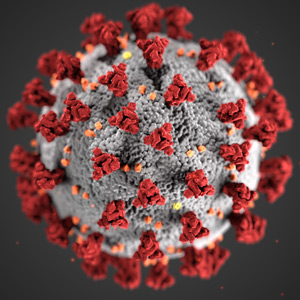 It is widely recognized that Greece survived the difficult test of COVID-19 well. The international press has been writing about the “little Greek miracle” for more than a month: a country ravaged by the economic crisis of the past years has been able to resist the public health challenge better than many other European countries. And it is right to emphasize this unexpected success as due primarily to the speed of the government’s decisions, the closing of the borders, the strict lockdown of about two months, but also the population’s obedience to special laws issued by the authorities, both in terms of health and politics. Every evening at 6:00 PM, the epidemiologist Professor Sotirios Tsiodras spoke to the public directly on television about the measures taken and the track of the pandemic, in a calm, humane, and confident tone, showing appropriate emotions when he spoke of the deaths, turning into the family doctor, a personality familiar to everyone. It is widely recognized that Greece survived the difficult test of COVID-19 well. The international press has been writing about the “little Greek miracle” for more than a month: a country ravaged by the economic crisis of the past years has been able to resist the public health challenge better than many other European countries. And it is right to emphasize this unexpected success as due primarily to the speed of the government’s decisions, the closing of the borders, the strict lockdown of about two months, but also the population’s obedience to special laws issued by the authorities, both in terms of health and politics. Every evening at 6:00 PM, the epidemiologist Professor Sotirios Tsiodras spoke to the public directly on television about the measures taken and the track of the pandemic, in a calm, humane, and confident tone, showing appropriate emotions when he spoke of the deaths, turning into the family doctor, a personality familiar to everyone.
Continue reading →
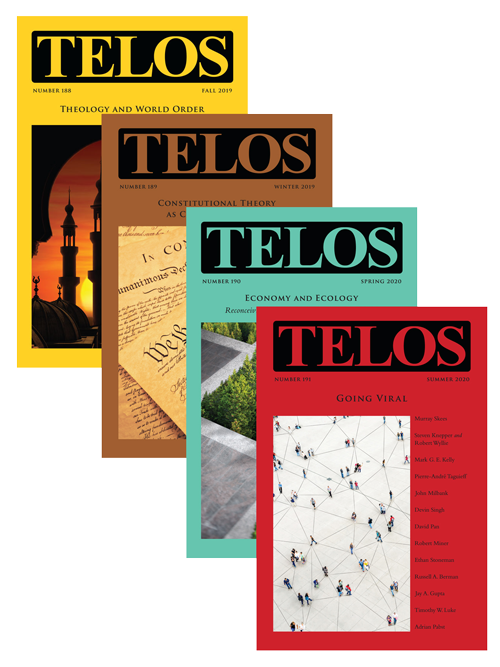
By Russell A. Berman · Wednesday, June 17, 2020 The following essay is part of a group of responses to the COVID-19 pandemic that appear in Telos 191 (Summer 2020): Going Viral, which is now available for purchase in our store. Individual subscriptions to Telos are also available in both print and online formats.
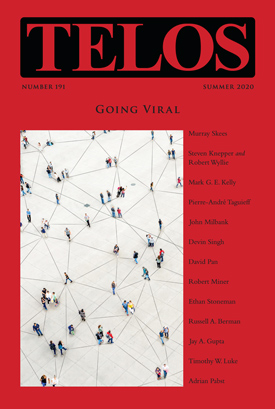 As of this writing, the precise origin of the Chinese virus, SARS CoV-2, remains unclear. It is however known that cases predated the eruption in the “wet market” in Wuhan—which in the meantime has been reopened, suggesting at least that Chinese authorities do not believe it was the source of the pandemic. The alternative theory that the virus escaped from experiments in one of Wuhan’s virology laboratories therefore remains plausible. In any case, it is certain that Wuhan was the first epicenter and that state authorities used repressive power to delay alerting the world by possibly more than a month. With that additional time, the spread of the disease might have been contained, or its dissemination at least impeded, if China and the World Health Organization had acted with transparency and integrity. They did not. As of this writing, the precise origin of the Chinese virus, SARS CoV-2, remains unclear. It is however known that cases predated the eruption in the “wet market” in Wuhan—which in the meantime has been reopened, suggesting at least that Chinese authorities do not believe it was the source of the pandemic. The alternative theory that the virus escaped from experiments in one of Wuhan’s virology laboratories therefore remains plausible. In any case, it is certain that Wuhan was the first epicenter and that state authorities used repressive power to delay alerting the world by possibly more than a month. With that additional time, the spread of the disease might have been contained, or its dissemination at least impeded, if China and the World Health Organization had acted with transparency and integrity. They did not.
Continue reading →
By David Pan · Monday, June 15, 2020 Telos 191 (Summer 2020): Going Viral is now available for purchase in our store. Individual subscriptions to Telos are also available in both print and online formats.
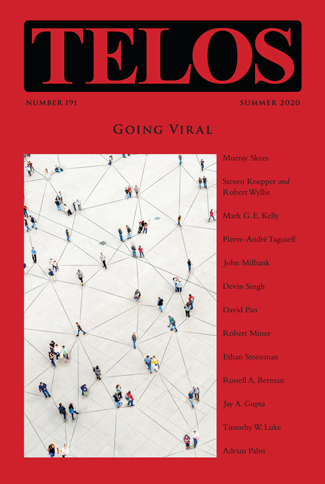 While “going viral” has taken on a new meaning by recuperating an old one, it is the virtual experience that seems to be more enduring. Not only has the pandemic sped up the shifting of human activity onto virtual platforms, but the viral dynamics of social media seem set to outlast the microbial versions: it has turned out to be easier to lock down the Wuhan virus than President Trump’s Twitter feed. Yet in both cases, it is unclear whether it is the actual spread or the fear that is the greater danger. For this fear leads to the call for more authoritarian measures, whether this means censoring Twitter posts or locking down the population. But if viral spread leads to the reassertion of sovereignty, we also come to realize that the freedoms we have taken for granted are in fact the result of a curated space, in which the rules for interaction have always formed the hidden framework within which our lives have unfolded. As these framing conditions come into focus during the crisis, we have the opportunity to reimagine them in such a way as to retrieve sovereignty not as a kind of authoritarian reaction but as an understanding of how our values must inform the boundaries we set. This issue of Telos considers how the experience of going viral has come to dominate our political life as well as how our reflection on this process can free us to consider the alternatives. While “going viral” has taken on a new meaning by recuperating an old one, it is the virtual experience that seems to be more enduring. Not only has the pandemic sped up the shifting of human activity onto virtual platforms, but the viral dynamics of social media seem set to outlast the microbial versions: it has turned out to be easier to lock down the Wuhan virus than President Trump’s Twitter feed. Yet in both cases, it is unclear whether it is the actual spread or the fear that is the greater danger. For this fear leads to the call for more authoritarian measures, whether this means censoring Twitter posts or locking down the population. But if viral spread leads to the reassertion of sovereignty, we also come to realize that the freedoms we have taken for granted are in fact the result of a curated space, in which the rules for interaction have always formed the hidden framework within which our lives have unfolded. As these framing conditions come into focus during the crisis, we have the opportunity to reimagine them in such a way as to retrieve sovereignty not as a kind of authoritarian reaction but as an understanding of how our values must inform the boundaries we set. This issue of Telos considers how the experience of going viral has come to dominate our political life as well as how our reflection on this process can free us to consider the alternatives.
Continue reading →
|
|