Essential Reading: Carl Schmitt’s Land and Sea

Writing at the Claremont Review of Books, Aaron Zack reviews the new English translation of Carl Schmitt’s Land and Sea, now available from Telos Press. Purchase your copy in our online store and save 20% by using the coupon code BOOKS20.

Telos Press’s new edition of Carl Schmitt’s Land und Meer: Eine weltgeschichtliche Betrachtung (Land and Sea: A World-Historical Meditation) provides an essential guide for understanding sea power. . . . Schmitt provides an intriguing analysis of the link between the sea and the modern project’s culmination in creative, free-thinking individuals moving and acting within a liberal, global order . . .

Continue reading →

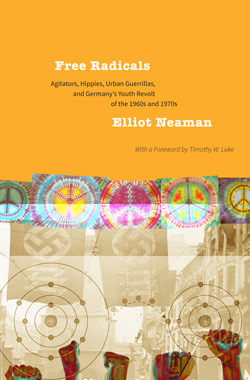
Elliot Neaman’s Free Radicals Takes First Place at London Book Festival

Telos Press is delighted to announce that Elliot Neaman’s Free Radicals: Agitators, Hippies, Urban Guerrillas, and Germany’s Youth Revolt of the 1960s and 1970s has won first place in the History category at the London Book Festival. Congratulations!

Continue reading →

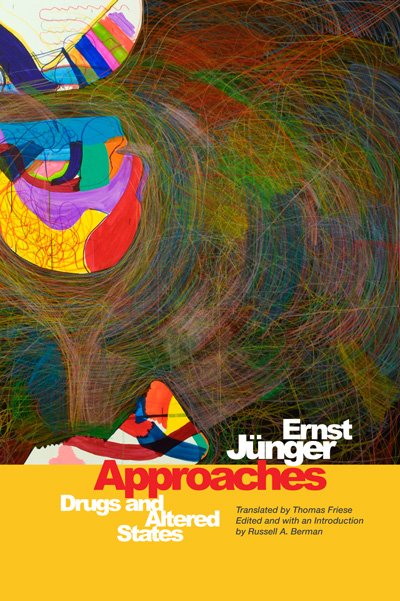
Freedom and Servitude: Why We Rattle Our Hidden Chains

“The populace consists of individuals and free men, while the state is made up of numbers. When the state dominates, killing becomes abstract. Servitude began with the shepherds; in the river valleys it attained perfection with canals and dikes. Its model was the slavery in mines and mills. Since then, the ruses for concealing chains have been refined.”
—Ernst Jünger, Eumeswil

Continue reading →

On Two Versions of the Counterculture

“There were actually at least two countercultures in 1968. The street mutineers dreamed of a political revolution, which was acted out as theater, using old scripts. In the second, politics became personal; emancipation came in the form of consumer choices. The first was collectivist and failed, the second was libertarian, individualistic, futuristic, and carried the day. In the United States Stewart Brand, the visionary who founded The Whole Earth Catalog in 1968, pithily described the difference as between ‘Berkeley and Stanford’: ‘Around Berkeley, it was Free Speech Movement, “power to the people.” . . .’ In Germany this kind of technology-as-revolution mindset was much more difficult to launch, given the entrenched romantic aversion to technology in the counterculture. . .”

Continue reading →

Mechanized Warfare and the Fate of the Individual

“The vastness and deadly desolation of the field, the long-distance operation of steel machines, and the relay of every movement in the night drew an unyielding Titan’s mask over the proceedings. You moved toward death without seeing it; you were hit without knowing where the shot came from. Long since had the precision shooting of the trained marksman, the direct fire of guns, and with it the charm of the duel, given way to the concentrated fire of mechanized weapons. The outcome was a game of numbers: Whoever could cover a certain number of square meters with the greater mass of artillery fire, won.”
—Ernst Jünger, Sturm, describing the Battle of the Somme, whose centenary is this year.

Continue reading →

On Late Capitalism

“The idea of a revolutionary, ‘post-materialistic’ subject, personified by marginal actors, was popularized by Jean-Paul Sartre, who viewed outcasts and criminals, like the writer and petty criminal Jean Genet, as enlightened critics of bourgeois society. In Germany, Frankfurt School theorists like Claus Offe proposed that in ‘late capitalism’ ever more social groups—the unemployed, the mentally ill, the lawbreakers—would be pushed to the margins and could eventually pose a real threat to the social order. The problem, as one wit put it, was that ‘late capitalism’ kept arriving too late.”

—Elliot Neaman, Free Radicals: Agitators, Hippies, Urban Guerrillas, and Germany’s Youth Revolt of the 1960s and 1970s

Continue reading →