By Andrew M. Wender · Friday, April 3, 2015  The emerging exhaustion of the Westphalian paradigm of state sovereignty intimates the profoundly contestable and contingent character of modern, Western claims for a universal model of history. Over several centuries, the state has embodied and enforced foundational postulates, such as the pre-eminence of the individual knowing subject, and the imagined divide between religious and secular realms of existence and authority (with the latter sphere effectively internalizing the sacred import of the former). At present, though, the state’s tenuousness, and yet in key instances fierce tenacity, amidst a world of potent transnational forces, portends the urgency for alternative conceptions of the meaning and arrangement of human life. Contemporary Middle Eastern quandaries are especially illustrative of this predicament: for example, the disintegration (as in Iraq, Syria, Libya) or, then again, coercive retrenchment (viz., Egypt) of state formations and nationalist identities; or, to take another sort of instance, the chimerical prospects for coexistence, or even bare existence, among conflicting national communities, as in Israel/Palestine. Are there political paradigms beyond the Westphalian state that could help to integrate plural traditions in pursuit of less exclusionary, and more just, historical possibilities? The emerging exhaustion of the Westphalian paradigm of state sovereignty intimates the profoundly contestable and contingent character of modern, Western claims for a universal model of history. Over several centuries, the state has embodied and enforced foundational postulates, such as the pre-eminence of the individual knowing subject, and the imagined divide between religious and secular realms of existence and authority (with the latter sphere effectively internalizing the sacred import of the former). At present, though, the state’s tenuousness, and yet in key instances fierce tenacity, amidst a world of potent transnational forces, portends the urgency for alternative conceptions of the meaning and arrangement of human life. Contemporary Middle Eastern quandaries are especially illustrative of this predicament: for example, the disintegration (as in Iraq, Syria, Libya) or, then again, coercive retrenchment (viz., Egypt) of state formations and nationalist identities; or, to take another sort of instance, the chimerical prospects for coexistence, or even bare existence, among conflicting national communities, as in Israel/Palestine. Are there political paradigms beyond the Westphalian state that could help to integrate plural traditions in pursuit of less exclusionary, and more just, historical possibilities?
Continue reading →
By Linas Jokubaitis · Wednesday, February 11, 2015  In his essay “Political Aesthetics: Carl Schmitt on Hamlet,” David Pan puts forward an interpretation of the relationship between aesthetics and politics in Schmitt’s discussion of Hamlet. Today the question about the relationship of aesthetics and politics in the thought of German jurist is a widely discussed topic. According to one interpretation, which is best represented by a sentence of Jürgen Habermas, “Carl Schmitt’s polemical discussion of political Romanticism conceals the aestheticizing oscillations of his own political thought.” But according to Schmitt’s self-understanding, this interpretation could not be further from the truth. In his essay “Political Aesthetics: Carl Schmitt on Hamlet,” David Pan puts forward an interpretation of the relationship between aesthetics and politics in Schmitt’s discussion of Hamlet. Today the question about the relationship of aesthetics and politics in the thought of German jurist is a widely discussed topic. According to one interpretation, which is best represented by a sentence of Jürgen Habermas, “Carl Schmitt’s polemical discussion of political Romanticism conceals the aestheticizing oscillations of his own political thought.” But according to Schmitt’s self-understanding, this interpretation could not be further from the truth.
Continue reading →
By Beau Mullen · Tuesday, January 20, 2015  Central to Carl Schmitt’s geophilosophy is his view that law is intrinsically linked to the physical location. This connection between the terra firma and the law is an essential element of what he refers to as nomos. Schmitt sees this as the most authentic form of law, distinguishable from views that perceive law as a normative or positive regime. In his article “Carl Schmitt and the Sacred Origins of Law,” Mika Ojakangas elucidates Schmitt’s conception of nomos, its relation to Schmitt’s view of mythopolitical legitimization of the state, and the consequences of rejecting the notion of such a link by secularization. Central to Carl Schmitt’s geophilosophy is his view that law is intrinsically linked to the physical location. This connection between the terra firma and the law is an essential element of what he refers to as nomos. Schmitt sees this as the most authentic form of law, distinguishable from views that perceive law as a normative or positive regime. In his article “Carl Schmitt and the Sacred Origins of Law,” Mika Ojakangas elucidates Schmitt’s conception of nomos, its relation to Schmitt’s view of mythopolitical legitimization of the state, and the consequences of rejecting the notion of such a link by secularization.
Continue reading →
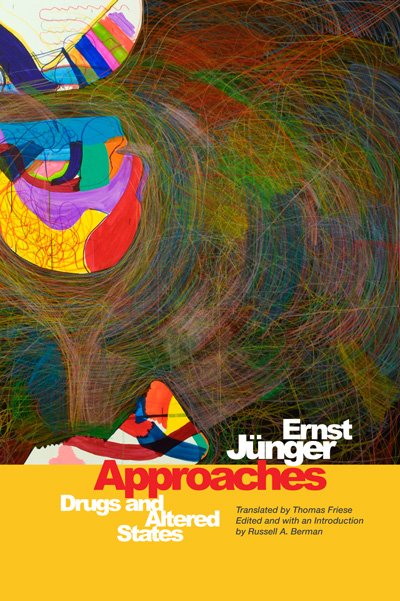
By Telos Press · Monday, December 1, 2014 For the month of December, save 20% on all Telos Press books purchased at our website. Now is a great time to pick up copies of some of our newest publications, including Matthias Küntzel’s Germany and Iran: From the Aryan Axis to the Nuclear Threshold and Joel Kotkin’s The New Class Conflict. In our online store you’ll also find key works by Ernst Jünger, such as On Pain and The Forest Passage, as well as Carl Schmitt’s Theory of the Partisan and The Nomos of the Earth. You can browse our full selection of books here.
Continue reading →
By Michael Millerman · Tuesday, August 12, 2014  Like Spinoza, many liberal thinkers have defined the liberty they promote in terms of the necessity of submitting to the law that guarantees it. This is a unique kind of rule of law, a rule of the “‘politically correct,’ universalist, managerial-liberal” (9) law of contemporary liberals. Both internationally and domestically, this law requires the muscular imposition of questionable political, moral, and economic principles, by means of an insidious and often nauseating bureaucratic, technocratic, mediacratic apparatus, onto largely unwilling publics. Crucially, the freedom championed by such liberals and allegedly secured by their law does not include the freedom to refuse their domination root and branch. Like Spinoza, many liberal thinkers have defined the liberty they promote in terms of the necessity of submitting to the law that guarantees it. This is a unique kind of rule of law, a rule of the “‘politically correct,’ universalist, managerial-liberal” (9) law of contemporary liberals. Both internationally and domestically, this law requires the muscular imposition of questionable political, moral, and economic principles, by means of an insidious and often nauseating bureaucratic, technocratic, mediacratic apparatus, onto largely unwilling publics. Crucially, the freedom championed by such liberals and allegedly secured by their law does not include the freedom to refuse their domination root and branch.
Continue reading →
By Linas Jokubaitis · Tuesday, July 15, 2014 In “The Source of the Tragic,” Carl Schmitt developed an original interpretation of The Tragedy of Hamlet, Prince of Denmark rooted in his sociological understanding of the relationship between art and contemporary politics in Shakespeare’s tragedy. According to the German jurist, one can fully understand and appreciate this masterpiece only by taking into consideration the concrete political situation at the end of the reign of the Tudor dynasty and the intense struggles for legitimacy and authority in which Shakespeare created his theatrical works.
Continue reading →
|
|