The Telos Student Seminars provide a forum for students around the world to engage with critical theory by discussing a common set of paired texts from Telos—one current essay and one pertinent essay from our archives. The following reports from our first Telos Student Seminars at Concordia University in Irvine, California, and the Hopkins-Nanjing Center in Nanjing, China, compare Paul Kahn’s “Law and Representation: Observations from an American Constitutionalist” (Telos 195, Summer 2021) and Paul Piccone’s “The Crisis of Liberalism and the Emergence of Federal Populism” (Telos 89, Fall 1991). The Irvine seminar advocates addressing the political challenges highlighted by Kahn and Piccone through a new American civil religion “built on mysticism,” while the Nanjing group took the seminar as an occasion for a wide-ranging, cross-cultural discussion about society and politics. Telos Student Seminars participants across the globe will gather virtually for a discussion with Paul Kahn at the end of this month. For more details about the Telos Student Seminars, including summaries of the two essays under discussion, click here.
|
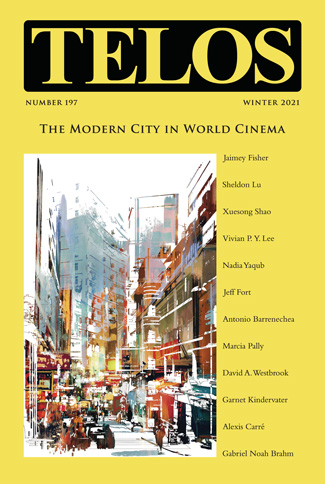
Today’s episode of the Telos Press Podcast features a panel discussion of Timothy W. Luke’s new book, The Travails of Trumpification, published earlier this month by Telos Press. The discussion, in which Tim is joined by David Pan, Fred Siegel, and Mark S. Weiner, covers a range of topics and questions, including the meaning and origins of “Trumpification”; Trump’s contempt for democratic liberal norms; the emergence of a progressive habitus in the early twentieth century; the critique of liberal managerialism; the rhetoric of the “forgotten little guy” (à la Rodney Dangerfield); the purposeful use of ignorance to send up the degreed classes; the extent to which Trump emerged out of “Nixonland”; Trump’s undermining of the claims of scientific truth; the relationship of science to political interest, and how each should inform the other; the populist attack on the New Class; Trump’s elevation of individual winning over larger collective interests and the public good; the weakening of a rationalist epistemology on which democracy depends in favor of an ethos of pure power; how the Afghanistan withdrawal and the coronavirus pandemic exacerbated the public’s disdain for expertise; and how power might be shifted from the administrative state to the local level as a way of integrating all members of the public in political decision-making and thereby revitalizing citizenship. Timothy W. Luke’s The Travails of Trumpification is now available in our online store, where you can save 20% off the list price by using the coupon code BOOKS20. The Telos Student Seminars provide a forum for students around the world to engage with critical theory by discussing a common set of paired texts from Telos—one current essay and one pertinent essay from our archives. The following reports from our first Telos Student Seminars in Budapest, Hungary, and Haifa, Israel, compare Paul Kahn’s “Law and Representation: Observations from an American Constitutionalist” (Telos 195, Summer 2021) and Paul Piccone’s “The Crisis of Liberalism and the Emergence of Federal Populism” (Telos 89, Fall 1991). The Hungarian seminar turned its attention to the relevance of political theology in the context of Viktor Orbán’s dismantling of liberal democratic institutions, while the Haifa seminar explored whether the essays by Kahn and Piccone “suggest a liberal, populist, or conservative solution to the crisis of the liberal state.” For more details about the Telos Student Seminars, including summaries of the two essays under discussion, click here. Telos 197 (Winter 2021): The Modern City in World Cinema, edited by Jaimey Fisher and Sheldon Lu, is now available for purchase in our store. Individual subscriptions to Telos are also available in both print and online formats.
In today’s episode of the Telos Press Podcast, David Pan talks with Linus Recht about his article “After Desire: Foucault’s Ethical Critique of Psychological Man and the Foucauldian Ethos of the Internet Age,” from Telos 196 (Fall 2021). An excerpt of the article appears here. In their conversation they discussed Foucault’s critique of the psychological self and his search for a form of selfhood that would allow for continual reinvention and the discovery of new pleasures; how a reading of Platonic psychology demonstrates the weakness of Foucault’s critique of the psychological self as a historical construct; how contemporary social media has translated Foucault’s ethics of the self into reality; and how the ubiquity of mobile phones and similar devices in our everyday life, particularly the way that they subject us to a constant stream of distracting stimuli, suggests that Foucault’s notion of what the self could be might actually be a recipe for misery. If your university has an online subscription to Telos, you can read the full article at the Telos Online website. For non-subscribers, learn how your university can begin a subscription to Telos at our library recommendation page. Print copies of Telos 196 are available for purchase in our online store. In today’s episode of the Telos Press Podcast, David Pan talks with Kyle Baasch about his article “Critical Theory in the Flesh: Adorno and Foucault in San Francisco,” from Telos 196 (Fall 2021). An excerpt of the article appears here. In their conversation they discussed how Foucault’s aversion to Marxism relates to his notion of the individual as endlessly transfiguring itself through acts of creative self-invention; how Adorno interprets the freedom of the subject within the context of consumer culture and exchange society; the influence of Adorno’s experience as a heartbroken lover on his conception of happiness, particularly in Minima Moralia; how Adorno’s notion of happiness relates to the conception of harmony that Foucault criticizes; and the extent to which the two thinkers can be put into conversation. If your university has an online subscription to Telos, you can read the full article at the Telos Online website. For non-subscribers, learn how your university can begin a subscription to Telos at our library recommendation page. Print copies of Telos 196 are available for purchase in our online store. |
   |
|||
|
Privacy Policy · Data Protection Copyright © 2026 Telos Press Publishing · All Rights Reserved |
||||