By Wolfgang Thierse · Friday, March 12, 2021 The following essay was originally published in the Frankfurter Allgemeine Zeitung on February 22, 2021, and appears here in translation with permission of the author. Translated by Russell A. Berman, with comments here.
To read more in depth from Telos, subscribe to the journal here.
Community membership used to be a matter of religion and, after that, ideology. Today this function has been taken over by the concept of identity. Religion and ideology in the past led repeatedly to serious and even bloody conflicts. Will this history repeat itself under the new principle? Themes of cultural membership seem to be rattling our Western societies increasingly, splitting them along the political lines of distributive justice. Questions of identity—ethnic, gender, sexual—dominate, as the debates over racism, postcolonialism, and gender grow violent and aggressive. These are probably unavoidable confrontations in an increasingly pluralistic society, just as they give expression to social conflicts, fought over the distribution of visibility and influence, attention and recognition.
As unavoidable as these conflicts may seem, they are also confusing, opaque, and ambivalent. The violence of some attacks against traditionalist positions, as well as the violence in the defense of tradition, in addition to the radicalness of identity demands lead to the question: How much identity politics strengthens the pluralism of a society, and at what point does it turn into fragmentation? The principle at stake is this: the ethnic, cultural, and religious-worldview pluralism that is growing in Germany as elsewhere is no idyll; on the contrary it is full of disputes and conflict potential. If this multifacetedness is to be lived out in a peaceful manner, then pluralism must be more than the mere coexistence of minorities and identities that not only differ from each other but also separate from each other. Fundamental commonalities are necessary, including of course a common language, and naturally also a shared recognition of justice and law.
Continue reading →
By Russell A. Berman · Friday, March 12, 2021 To read more in depth from Telos, subscribe to the journal here.
Former President of the German Bundestag Wolfgang Thierse mounts a powerful argument against identity politics in Germany and their political consequences. His comments here and originally here have elicited a robust discussion in Germany, especially because the current leaders of the Social Democratic Party (SPD), of which Thierse is a long-term member, reportedly responded that they felt ashamed at his “regressive” views. While the leadership represents the current left wing of the party, other voices from the center rallied to Thierse’s defense. At stake is the gap between alternative aspirations within this venerable party, once the foundational political organization of the German left with roots in the workers’ movement of the nineteenth century.
Continue reading →
By Telos Press · Thursday, March 11, 2021 To read more in depth from Telos, subscribe to the journal here.
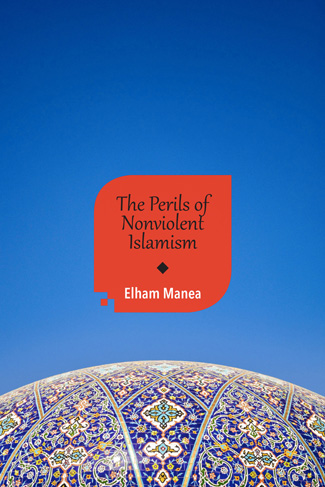
Writing in the Wall Street Journal, Tunku Varadarajan talks with Elham Manea about Switzerland’s recent decision to prohibit the wearing of full facial coverings in public, thereby restricting the burqa and the niqab. Manea’s new book The Perils of Nonviolent Islamism, which investigates the broader context of this decision in comprehensive detail, is now available from Telos Press in our online store for 20% off the list price.
An excerpt from the article:
 European democracies differ from America’s in notable ways, and many Americans have reservations about the Swiss prohibition: Aren’t burqa bans an illiberal curbing of religious and expressive freedom? By some reports, fewer than 100 women in Switzerland wear the burqa. Do they constitute so great a threat to the venerable Swiss nation that their constitution, which guarantees freedom of faith and conscience, has to be amended to alter their sartorial practice? European democracies differ from America’s in notable ways, and many Americans have reservations about the Swiss prohibition: Aren’t burqa bans an illiberal curbing of religious and expressive freedom? By some reports, fewer than 100 women in Switzerland wear the burqa. Do they constitute so great a threat to the venerable Swiss nation that their constitution, which guarantees freedom of faith and conscience, has to be amended to alter their sartorial practice?
Aware that judgments from afar can sometimes be glib, I put these questions to Elham Manea, author of a book published last month titled The Perils of Nonviolent Islamism. . . . Ms. Manea is quick to dismiss the argument that the ban curbs freedom. You can’t separate the burqa and niqab from their “religious and political contexts” and turn this into “a simple question of ‘choice.'” The burqa didn’t “come out of nowhere” and Muslim women haven’t “decided to embrace it on a whim.” Many Western feminists, she says, tend to “neutralize the context, as if it is of no consequence.” She urges those who are squeamish about the ban to ask which ideology teaches women to cover themselves completely. What are its theological features? What does it say about women?
Continue reading →
By Thomas Brussig · Monday, March 8, 2021 This essay was published in the Süddeutsche Zeitung on February 9, 2021, and appears here in translation with permission of the author. Footnotes have been added for clarification. Translated by Russell A. Berman, with comments here. The author intends the title as an ironic reference to Chancellor Willy Brandt’s 1969 statement that Germany “must risk more democracy.”
To read more in depth from Telos, subscribe to the journal here.
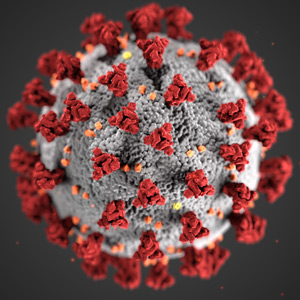 The corona crisis remains an experience of helplessness, even though infection rates are falling. Despite all the limitations on everyday life and despite the start of the vaccinations, an end to the restrictions is nowhere in sight—even though a few countries have succeeded in stopping the virus. The feeling of helplessness in the face of corona is due to the fact that we have had to surmount the corona crisis with the tools of democracy. The corona crisis remains an experience of helplessness, even though infection rates are falling. Despite all the limitations on everyday life and despite the start of the vaccinations, an end to the restrictions is nowhere in sight—even though a few countries have succeeded in stopping the virus. The feeling of helplessness in the face of corona is due to the fact that we have had to surmount the corona crisis with the tools of democracy.
Sigmund Freud spoke of “three blows to humanity”: first, the Copernican worldview that pushed us out of the center of the universe; second, Darwinism, according to which we did not descend from God but from monkeys; and third, psychoanalysis, which teaches that we are not self-determined but only act due to hidden, unconscious, and instinctual motivations. Now we can speak of three blows to democracy, although it was only thirty years ago when liberal self-consciousness stood at its high point. According to the popular thesis of an “end of history,” market economies and democracy had achieved such an indisputable victory that nothing would stop their spread around the world.
Continue reading →
By Russell A. Berman · Monday, March 8, 2021 To read more in depth from Telos, subscribe to the journal here.
A distinctive feature of public debate in Germany involves prominent literary authors, especially novelists, expounding on current political matters in major newspapers. Thomas Brussig’s essay “Risk More Dictatorship,” translated here, belongs to this genre. Known especially for his satire of East Germany, Heroes Like Us, Brussig chose a provocative title that seems to echo and respond to Chancellor Willy Brandt’s appeal more than fifty years ago to “risk more democracy.” Brandt was speaking in 1969 at a pivotal moment in the history of West Germany, indeed of the whole world, in the face of the protests during the previous year; Brussig in contrast appeals for “more dictatorship” in the face of the coronavirus pandemic, which he depicts as a potentially similar turning moment, with an accelerated “learning process,” that calls old certainties into question. These include the “end of history” claim that liberal democracy is inevitable; Brussig suggests that the “impotence” of democracies in the face of the pandemic raises the question as to whether other forms of government might be superior. The Chinese model of dictatorship casts a shadow across the essay.
Continue reading →
By B. Venkat Mani · Friday, March 5, 2021 To read more in depth from Telos, subscribe to the journal here.
On February 2, the second day of Black History Month, a tweet from a Black woman in the United States unleashed a war of words in India, with global resonance. Rihanna, the Barbados-born U.S. singer, entrepreneur, philanthropist, and cultural activist posted a one-liner: “why aren’t we talking about this?!” with the hashtag #FarmersProtest and a link to a report about the government of India shutting down internet services in areas bordering the national capital, New Delhi, where farmers have been carrying out a movement to oppose three contentious farm laws.
Rihanna’s tweet went viral. The climate activist Greta Thunberg, Hollywood actor John Cusack, U.S.-based lawyer and supporter of Black Lives Matter Meena Harris, former adult star Mia Khalifa, Instagram influencer Amanda Cerny, R&B singer Jay Sean, and music composer Dr. Zeus all expressed support for the Indian farmers’ protests in their own independent tweets. Kisan Ekta Morcha, the official twitter account of the United Farmers’ Front, thanked Rihanna for her support of the movement, and countless Indians praised her for drawing international attention to the movement.
Continue reading →
|
|